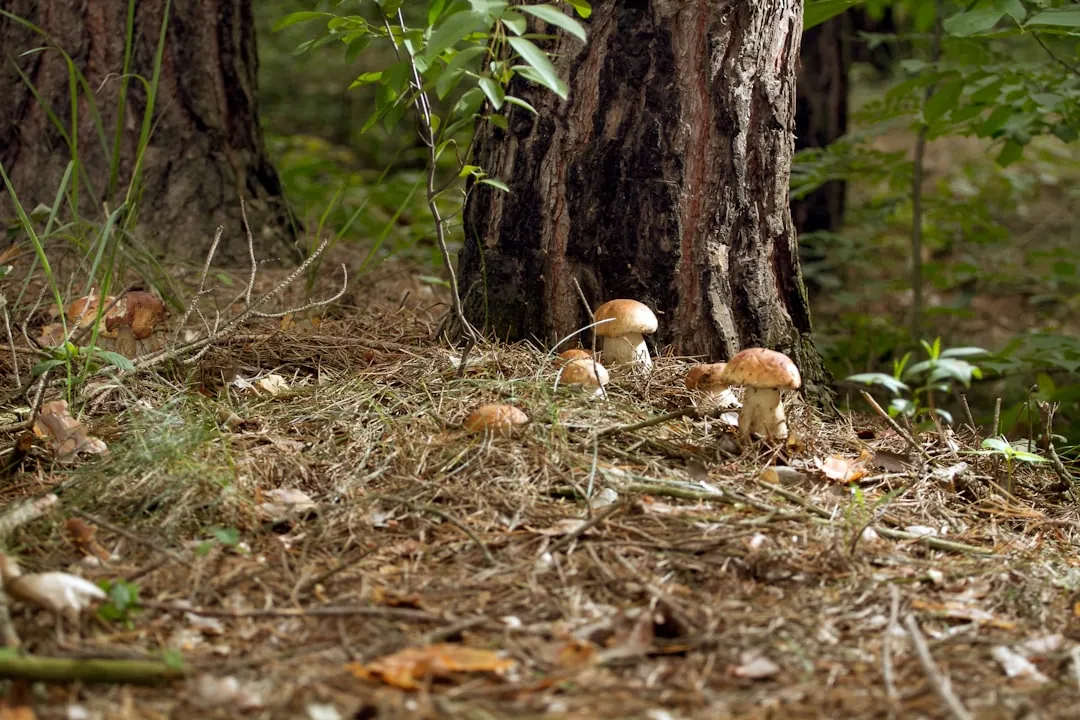
Two Europes, one mushroom
The Anglo-Saxon world inherited suspicion. English has a word, toadstool, that exists only to mean a mushroom you must not eat, and folklore filled the gap where knowledge should have been: fairy rings, witches' food, things that appear overnight in a damp field and are therefore not to be trusted. Anyone who learned about mushrooms that way learned a single rule, which is do not.
Italy learned the opposite rule, and learned it early. From late August the mushroom fever crosses the Apennines from Piedmont to Calabria. People get up at four. Every family has its places and does not give them up, not even to relatives. Local papers print harvest forecasts next to the weather.
The inheritance is Roman. The most prized mushroom of the empire was not the porcino but the ovolo, Amanita caesarea with its orange cap, food for emperors. There is a story, repeated often enough to be worth telling as a story, that it had its own dedicated tableware, and another that the name Boletus belonged to the Caesars' mushroom before science reassigned it to the porcino. Neither is well documented, and we pass them on as tales rather than facts.
One thing that is documented: in 54 AD the emperor Claudius died of poisoning, and the tradition holds that Agrippina mixed a lethal mushroom into a dish of ovoli. Nero, taking the throne, reportedly began calling mushrooms the food of the gods, since they had turned Claudius into one.
Why porcini are difficult to pair
The problem is umami. Mushrooms are full of it, and umami does something specific to wine: it makes tannins feel more aggressive and acidity feel sharper. The same Barolo that seems perfect with braised beef can turn hard and almost bitter next to a plate of porcini.
Then there is the cooking, which matters more than the mushroom. Raw porcini sliced with parmesan and a whole porcino grilled over embers are different dishes, and a mushroom risotto is different again. Fat changes everything: the butter in a risotto, the oil on a raw plate, the cream in a sauce each ask for a different answer.
The rule we hold to is simple. Porcini want a medium-bodied red with tannins that are present but tamed, and enough acidity to handle fat. No heavy extraction, no intrusive oak. The wine should keep the mushroom company rather than challenge it.
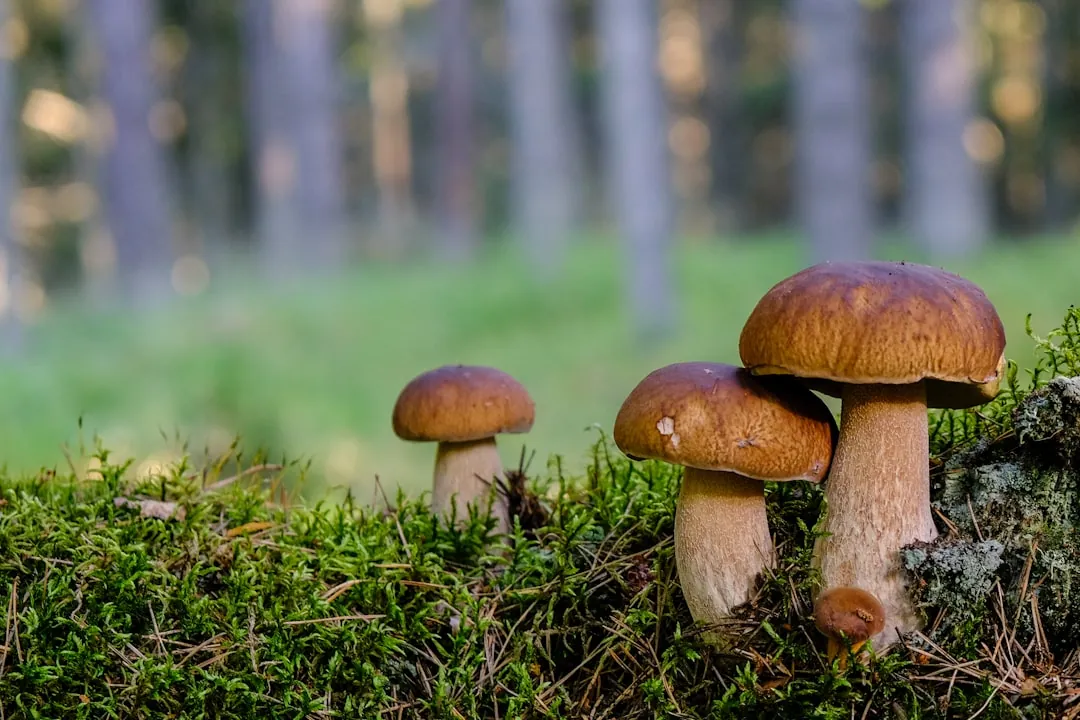
Worth saying what a porcino actually tastes like, because the pairing starts there. Raw it is crisp and sweet, with hazelnut and almond and an almost vegetal freshness. Cooked it changes profession entirely: meaty, deep, with damp undergrowth, leather and sometimes a smoky edge off the grill. It is the second version that carries a red, and the first that fears one.
The three that work almost every time
Barbera d'Alba. If we had to choose one, this. Barbera's acidity is its signature and it does exactly the job required: it cuts the fat, cleans the palate and leaves room for the mushroom instead of occupying it. The tannins are soft, and the undergrowth note many Barbere carry naturally weaves into the porcino rather than fighting it. With mushroom risotto it is close to unbeatable.
Nebbiolo d'Alba or Langhe Nebbiolo. Nebbiolo has the same aromatics as Barolo, rose and tar and undergrowth, without the tannic structure that becomes a problem with mushrooms. It is the Barolo you can drink now, and with porcini it is often the more elegant choice.
Rosso di Montalcino. Brunello's younger sibling, and here the better one. Young Sangiovese, lively acidity, fine tannins, cherry and a herbal streak that works with cooked mushrooms. It costs a fraction of Brunello and does a better job on the plate, because it does not sit on top of it.
Two notes that help more than another recommendation. Serve these at 14 to 16 degrees, not at room temperature: a Nebbiolo at 20 degrees turns alcoholic and its tannins stiffen exactly when you need the opposite. And avoid heavily extracted reds aged in new oak, because the vanilla and toast fight the undergrowth of the mushroom instead of accompanying it.
By preparation
Raw, as carpaccio. The mushroom is at its most delicate and a red buries it. A structured white is better: Fiano di Avellino, Greco di Tufo, or Timorasso if you want to stay in Piedmont, all of which have body and minerality without intrusive aromatics.
Risotto or pasta. Barbera territory. The fat of butter and cheese asks for acidity, and the creaminess softens the tannins. A young Dolcetto d'Alba works too, simpler but well aimed.
Grilled or trifolati. Trifolati is the standard Italian preparation and worth knowing: sliced, cooked fast in oil with garlic and parsley, nothing else. Grilled whole, a porcino develops toasted and almost meaty notes. Nebbiolo is at its best here.
With braised meat. When mushrooms accompany meat, the wine answers the meat. Now Barolo, Barbaresco and Brunello finally make sense, because they are not alone against the mushroom.
With eggs. A porcini frittata is one of the best things in Italian home cooking and one of the hardest for wine, because egg flattens almost everything. You want marked acidity and minimal tannin: Barbera works, and a structured rosé like Cerasuolo d'Abruzzo works better.
Fresh, dried, and the season
Dried porcini are not a winter compromise, they are a different ingredient. Drying concentrates everything and multiplies the umami, so a risotto made with dried mushrooms pushes harder than one made with fresh. With dried, move up a step in the structure of the wine. And the soaking water, strained and never thrown away, carries half the flavour into the pan.
The season follows the rain. The main window runs from late August to November, peaking in September and October, but the real date is set by late summer rain followed by days that are still warm. In dry years the flush slips or fails, and the price on the market stall says so before any forecast does.
Season changes the plate and therefore the wine. September porcini, full of water and just picked, are best in fast light preparations and want fresher wines. Late October ones, from a cold wood, have denser flesh and more concentrated flavour, and suit long cooking and slightly more structured reds.
Where they grow matters as much as when. Porcini favour chestnut, beech and oak, which in Italy means the Apennines above all: the Tuscan-Emilian range, the Umbrian-Marchigian one, the Sila in Calabria. A chestnut-wood porcino and a beech-wood one do not smell the same, and people who have picked them for years will tell you which is which by the cap.
Borgotaro, and the rules if you go picking
In the Parma Apennines, the Fungo di Borgotaro received IGP status in 1996: it is the first and still the only Italian mushroom with a protected designation, alongside Parma ham and parmesan. One correction to something repeated often: it was not the first mushroom in Europe to get one, and the trade registers contradict that claim.
In Piedmont, where porcini grow very well, the mushroom lives somewhat in the shade. There the season belongs to truffle.
On the rules, do not trust a single number. Picking is regulated by REGION, not nationally: a paid permit in most cases, and daily limits that differ from one region to the next. The figure you hear repeated is around three kilos per person, and it needs checking wherever you are going, because elsewhere it is different. The same applies to the cost of the permit.
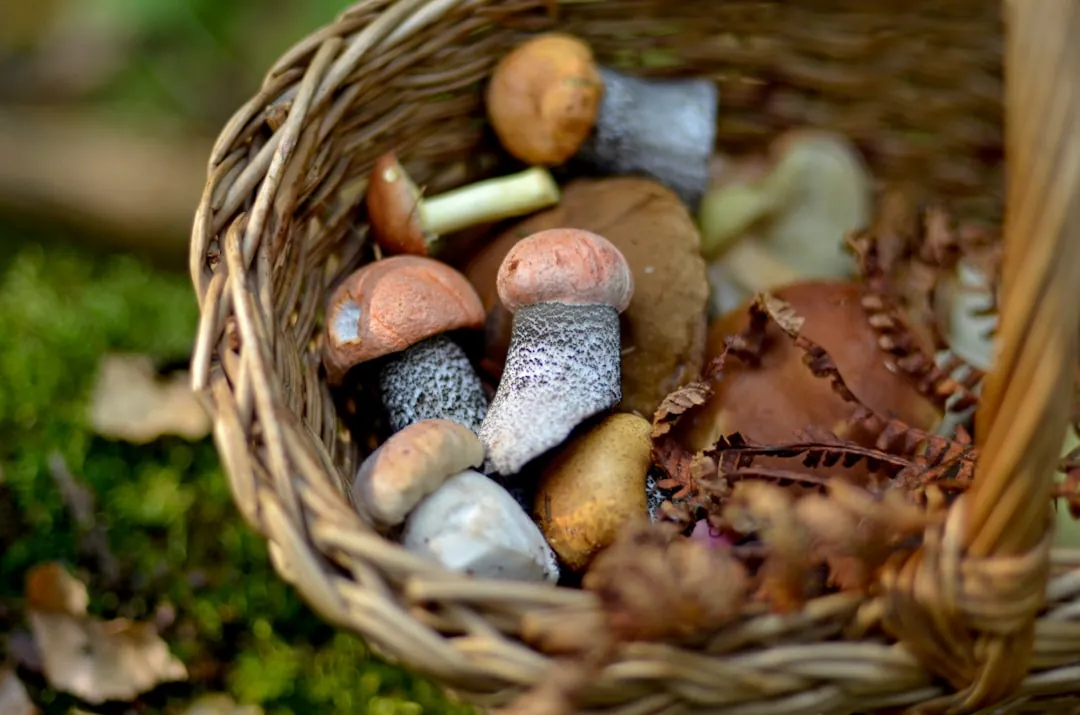
One rule is shared and strictly enforced: plastic bags are forbidden. You collect in rigid perforated containers, classically a wicker basket, so the spores keep falling along the path and the wood regenerates. Forest wardens do issue fines for this.
If you are visiting rather than resident, the practical version is that a permit is bought locally, often at a municipal office or a licensed shop, and that nobody will show you the good spots. That last part is not unfriendliness, it is the entire culture in one gesture.
Domande frequenti
What is the best wine with porcini?
A medium-bodied red without aggressive tannins. Barbera d'Alba for risotto and pasta, Nebbiolo d'Alba for grilled porcini, Rosso di Montalcino as the all-round choice. Avoid very tannic reds with mushrooms alone: umami makes them hard.
Why does Barolo sometimes fail with mushrooms?
Because the umami in mushrooms accentuates tannin. A young Barolo next to a plate of porcini alone can read as bitter and angular. With braised meat and mushrooms it makes sense again, because the meat balances the tannin.
Red or white with raw porcini?
White, and structured. Fiano di Avellino, Greco di Tufo or Timorasso have body and minerality without covering the delicacy of the raw mushroom. Any red, even a light one, takes over.
How many mushrooms can you pick in a day in Italy?
It depends on the region: picking is regulated regionally and limits differ. Around three kilos per person is the figure usually quoted, and it needs checking locally. A paid permit is required in most areas.
Are plastic bags really banned for mushroom picking?
Yes. You must use rigid perforated containers, classically a wicker basket, so spores continue to disperse through the wood. Wardens can and do fine people for a plastic bag.
Is Borgotaro really the first IGP mushroom in Europe?
No, that is an exaggeration in wide circulation. The Fungo di Borgotaro has held IGP status since 1996 and is the first and only Italian mushroom with one, which is a real distinction that does not need enlarging to a continental scale.