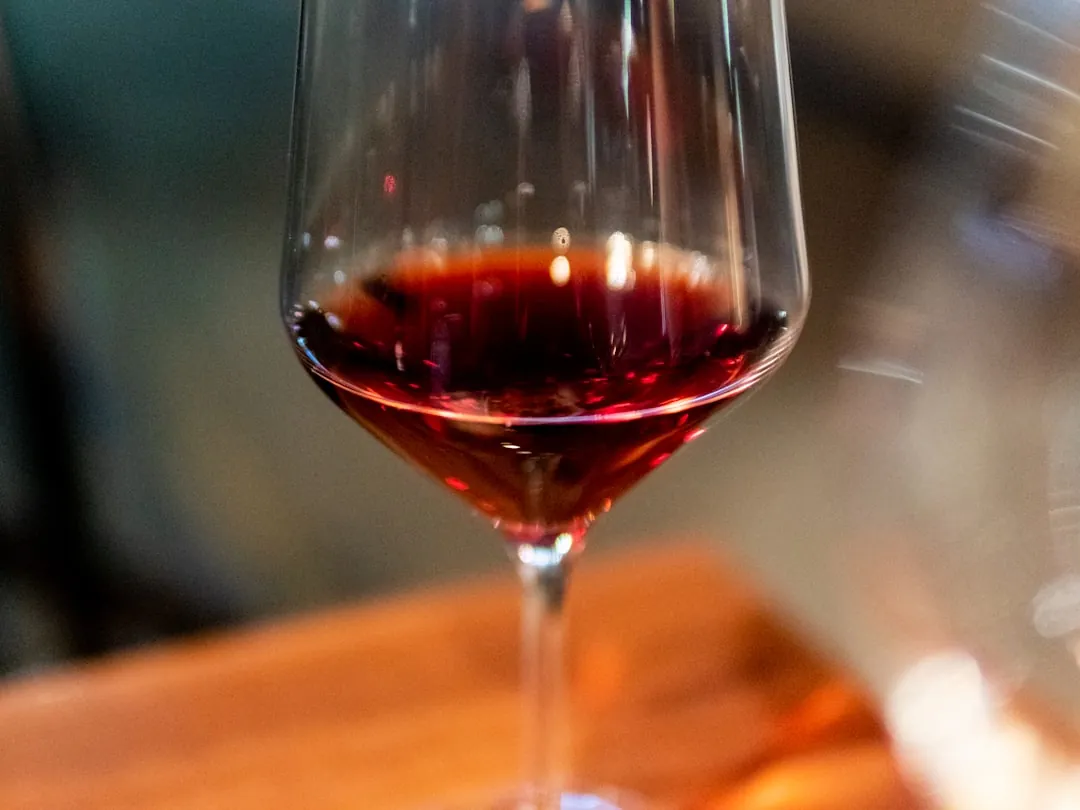
What tannins are and where they come from
Tannins are polyphenolic compounds found in grape skins, in the pips and in the stems. When a red wine ferments, the juice sits in contact with the skins for days or weeks, and in that time the tannins move from the skin into the liquid. That is why white wine, made without skin contact, has very little or none.
Skins are not the only source. Oak barrels give tannin to the wine as it ages, and those are different: softer, with hints of vanilla and sweet spice, against the more austere and astringent tannins of the grape when young.
There is a distinction worth knowing. Hydrolysable tannins come mainly from wood, condensed tannins from the grape. The condensed ones are what you feel most, especially in young structured wines. Over time in bottle they polymerise, joining into larger molecules, and the astringency softens. That is why a ten-year-old Barolo feels velvety where a newly released one does not.
Why tannins dry your mouth
The drying happens because tannins bind to the proteins in your saliva, in particular to mucin, the glycoprotein that keeps your mouth lubricated. Once that protein is captured, it stops doing its job and the saliva no longer flows freely. The result is the tightening that tasters call astringency.
Astringency is not a flavour. It is a tactile sensation, picked up by the mechanical receptors of the mouth rather than by taste buds. That makes it different from bitterness, which is an actual taste. Most people confuse the two, and they are separate: a wine can be bitter without being astringent, and the reverse.
Learning that difference changes how you drink. If you feel astringency, there is plenty of tannin and the wine is probably young or heavily structured. If you feel bitterness, you are picking up other phenolic compounds or a quirk of the grape. Young reds often have both, and separating them mentally makes your palate much more precise.
It also explains why food helps. The proteins in what you eat, in meat, cheese and pulses, do the same job as the proteins in saliva: they bind the tannins first. That is why a glass of Amarone with a steak works and the same wine on its own can feel aggressive. It is not the mystique of food matching, it is chemistry in your mouth.

Recognising tannins and choosing what suits you
Not all tannin feels the same. There are hard, dry tannins, the ones in a young Nebbiolo or a Sagrantino, which leave the mouth almost dusty. There are velvety tannins, as in a ripe Merlot, where the grip is present but soft. And there are fine silky tannins, in a good Burgundian Pinot Noir or an aged Barolo, which you barely notice and which hold the wine together without attacking anything.
To train yourself, one exercise beats any explanation: take two red wines of the same grape, one young and one with a few years on it, and drink them one after the other. A Montepulciano d'Abruzzo at two years against one at seven is a good and inexpensive place to start.
If you find astringency unpleasant, begin with grapes that are naturally low in tannin: Pinot Noir, Dolcetto, Gamay, Frappato. Frappato is Sicilian, pale and perfumed, and it surprises people who expect southern Italian reds to be heavy. These are proper reds with character and without the tannic weight that can put off a newcomer. If you like that dry structured grip, then Sagrantino, Nebbiolo, Aglianico and Cabernet Sauvignon are your territory.
Tannin also does preservation work. It is one of the things that lets certain reds age for decades, and it is why an open bottle of a tannic red holds up better over a few days than a white or a light red would.
Domande frequenti
Are tannins bad for you?
There is no evidence that tannins in themselves are harmful. Grape polyphenols, tannins among them, have antioxidant properties that have been studied. The health conversation around wine is mostly a conversation about alcohol, and tannin is not the problem in it.
Does white wine contain tannins?
Very little or none in most cases, because white wine is made without skin contact so the tannins never reach the liquid. The exception is orange wine, white grapes macerated on their skins the way reds are. Those have real tannin, sometimes quite firm.
Why do some reds dry the mouth more than others?
Grape, winemaking and age. Nebbiolo, Sagrantino and Cabernet Sauvignon have thick skins rich in tannin, and a long maceration extracts more of it. A young wine still has them hard, and years in bottle soften them. Serving the wine too warm also exaggerates the sensation.
What can I eat to soften astringency?
Anything with protein: red meat, aged cheese, pulses, eggs. Those proteins bind the tannins instead of your saliva doing it. It is exactly why big tannic reds shine at the table and can feel hard on their own before dinner.
Do tannins cause red wine headaches?
It is a common belief and science has never confirmed a direct link. The main suspects are alcohol, biogenic amines like histamine and tyramine, and sulphites in sensitive people. Tannins remain in the discussion without being the leading candidate.
Which tannic Italian reds can I buy from abroad?
Barolo, Barbaresco, Brunello and Amarone are exported widely and easy to find through specialists. Sagrantino di Montefalco and Aglianico are less common, and Frappato usually requires a Sicilian specialist. The shop linked on this page ships within Italy only, so if you are ordering from outside Italy it cannot deliver to you.