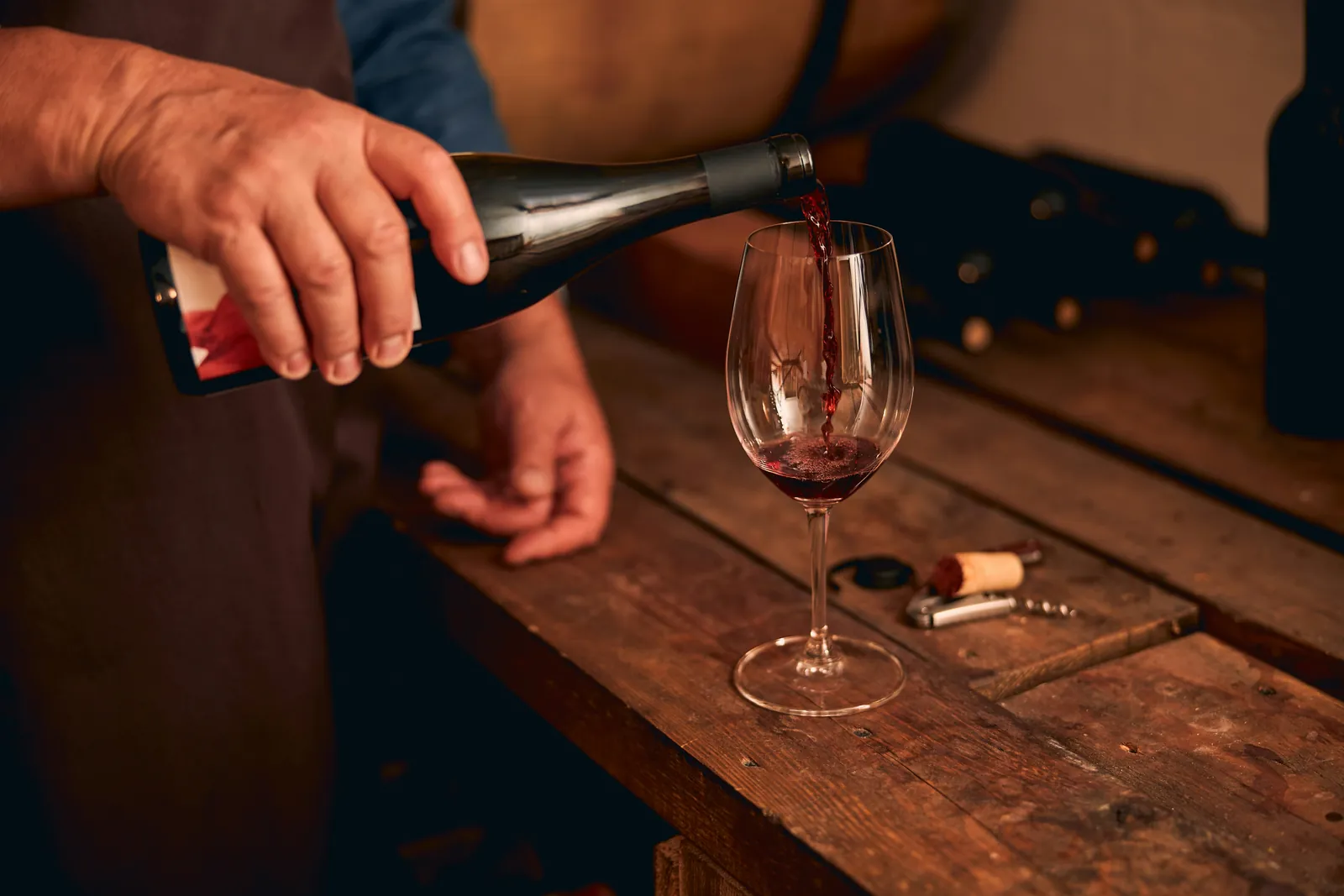
Why "room temperature" stopped being useful
People still say red wine should be served at room temperature. The trouble is that the phrase was coined in the nineteenth century, when a European dining room reached 16 to 18 degrees at best. Our rooms now sit at 20 to 24, and at that temperature a serious red turns heavy and hot. The alcohol comes forward, the aromas flatten out, and what should be a good mouthful arrives tired and blurred.
The uncomfortable truth is that almost every red drunk at home is served too warm. If a bottle of Montepulciano d'Abruzzo or Barbera has been on the table for an hour, it is already at 22 degrees. Put it in the fridge for 20 to 25 minutes before opening and you get a different wine: livelier, with cleaner fruit and far easier drinking.
This is not about chilling red like a summer white. It is about reaching the temperature the wine was built for, which for most reds is between 14 and 18 degrees. A wine thermometer costs a few euros and saves better bottles than that.
What temperature for which red?
There is no single answer. A fizzy Lambrusco and an aged Barolo have nothing in common, and treating them alike is a mistake. The logic is simple: the lighter and fruitier the wine, the more it gains from being cool. The more structured and tannic, the more it needs a few degrees to open.
Light reds sit happily between 10 and 13 degrees, nearly as cool as a white. That covers Beaujolais and two Italians worth knowing. Schiava comes from Alto Adige, the German-speaking province in the far north where the same grape is also called Vernatsch, and it is pale, light and made to be drunk young. Lambrusco is the other one, and it deserves a word of defence: the sweet fizzy version exported by the tanker in the 1970s is not what Italians drink. The dry Lambrusco served in Emilia with cured pork is a genuinely good wine, and cold.
Medium-bodied reds want 14 to 16 degrees. Cool but not cold. Chianti belongs here, along with Barbera, Dolcetto and Morellino di Scansano, which is Sangiovese grown in the Maremma on the Tuscan coast.
The big structured reds, Barolo, Brunello di Montalcino, Amarone and Taurasi, want 16 to 18 degrees and no more. At 20 the alcohol takes charge and the wine loses its shape.
A practical note: if a bottle is coming out of a cellar at 16 degrees it is already right for the big reds. If it is coming out of the fridge at 6 or 7 degrees, take the light reds out 15 to 20 minutes before serving and the medium ones about 30. Never pour a structured red straight from the fridge. It needs those minutes to open, and they matter.

How to cool a bottle down, or warm one up, in a hurry
Real life does not always allow planning. Guests arrive in half an hour and the bottle is at the wrong temperature. For cooling a red quickly, a bucket of water and ice in equal parts is the most efficient method there is: it drops the temperature by around 10 degrees in 10 to 15 minutes. The fridge alone is slower but fine if you have 25 to 30 minutes.
For light reds you want served cool, a gel sleeve from the freezer works and costs very little. It chills less evenly than the ice bath, so check with a thermometer now and then.
Warming a bottle that came out of the fridge is the opposite problem and has one good answer: stand it at room temperature and wait. Never put a bottle near direct heat, not the oven and not a radiator, because sharp swings damage the wine. If you are short of time, cup the glass in your hands for a few minutes after pouring. Body heat warms wine in the glass surprisingly fast.
One last thing: treat the serving temperature printed on a back label as a suggestion, not a law. Your own mouth is the better instrument. If the wine smells of alcohol, it is too warm. If the tannins feel angular and hard, it is probably too cold. The glass tells you, once you know to ask it.
Domande frequenti
Should red wine go in the fridge?
It depends on the wine. Light reds like Lambrusco or Schiava, yes: they are served cool, between 10 and 13 degrees. Structured reds like Barolo or Brunello, no. The fridge takes them too low and they need 30 to 40 minutes out to climb back to the 16 to 18 degrees they want. For an open bottle you are storing, the fridge is right for every type, but give it a few minutes out before pouring.
What temperature for Chianti?
Chianti Classico and the more structured versions are good between 15 and 17 degrees. A young fruity Chianti is fine at 14. In practice: straight from a cellar at 16 degrees it is ready. From a kitchen shelf at 22, give it 20 minutes in the fridge before opening.
Why does warm red wine taste of alcohol?
Ethanol is more volatile as it warms. Above 18 to 20 degrees it evaporates faster, and that sharp hot note is what reaches your nose and mouth. Dropping the temperature by 3 to 4 degrees rebalances the whole thing: the alcohol settles down and the fruit comes back to the front.
Can I put red wine in an ice bucket in summer?
Yes, especially the light ones. With 30 degrees outside, serving a Lambrusco or a Barbera at 12 to 14 degrees out of the bucket is exactly right. For more serious reds use the bucket to bring them down, then take them out: you do not want them below 14 to 15 degrees.
Does temperature change the calories in wine?
No. Calories come from alcohol and residual sugar, not from how cold the glass is.
Can I buy these wines if I am not in Italy?
Chianti, Barbera and Lambrusco are stocked almost everywhere in Europe. Schiava and Morellino di Scansano travel much less, and Taurasi is scarce outside Italy. The shop linked on this page ships within Italy only, so if you are ordering from outside Italy it cannot deliver to you.