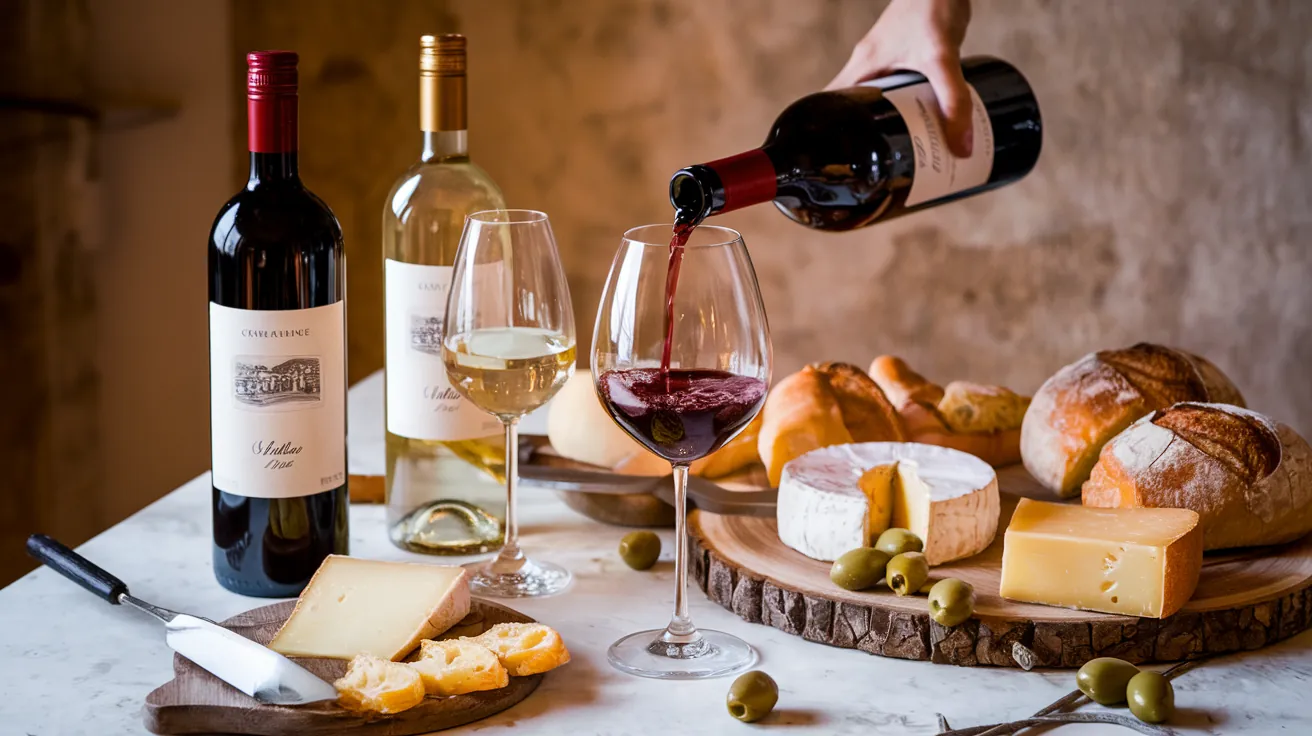
What you actually feel in the glass
Moving from a white to a red, the first thing you notice is not the colour, it is the texture. Red wines have tannins, the molecules that come from skins, pips and sometimes wood, and they leave a light grip on the gums. That is the dry-mouth sensation after a sip of Barolo or Sagrantino. It is not a flaw. It is structure, and it is what lets a wine stand up to a plate of food.
Whites put almost everything on acidity. Acidity is what makes your mouth water and cleans the palate, and it is why a Vermentino works with grilled sea bream. You can have whites that are sharp and taut, like a young Soave, or soft and almost creamy, like an oaked Chardonnay. What you will not have is tannin.
Then there is serving temperature, which is practical rather than fussy. Reds want 14 to 18 degrees depending on the style: a light Bardolino wants coolness, an Amarone wants more warmth. Whites sit between 8 and 12. Serve a white too warm and the freshness goes, leaving alcohol and flatness.
One more concrete difference: whites are usually drunk young, within two or three years of harvest, while serious reds can wait years and sometimes decades.
Where the difference comes from: the skins
Colour usually comes from the grape, but the real difference between red and white is how the wine is made, not only what it is made from. This surprises most people.
To make a red, the skins stay in contact with the juice during fermentation, sometimes for weeks. In that time they release colour, from compounds called anthocyanins, along with tannin and a set of aromas you would never find in a white. That process is maceration. The longer it runs, the darker, more tannic and more structured the wine.
For whites the skins are removed straight after pressing and only the clean juice ferments. That is why whites are lighter and fresher and rarely have the weight of a red. The exception is orange wine, white grapes fermented with prolonged skin contact: tannin, amber colour and a complexity unusual for a white.
Wood is the other variable. Many serious reds spend months or years in barrel, large oak casks or small barriques, which adds vanilla, spice and tobacco and softens the tannins. Some whites see wood too, certain Chardonnay and Fiano among them, but the effect is different: there are no tannins to soften, so what is being sought is roundness and aromatic complexity.

Food, calories and the health question
The rule about meat with red and fish with white is a useful starting point and too crude to rely on. The real logic is structure, not colour. Sea bass baked in salt with a Barolo would be a disaster because the wine buries the dish. Seared tuna with a light Etna Rosso works very well.
Tannic reds handle the fat and protein of meat because the tannins bind with the proteins and soften. Acidic whites cut through fat, which is why fried seafood with Falanghina is a classic. With aged cheese, though, a soft red usually beats any white.
On calories, the gap between red and white is small. A standard glass of red averages slightly more than a dry white, but the variables that actually matter are alcohol level and residual sugar, which differ far more between two bottles than between the two categories.
On health, you often hear that red is better because of resveratrol, an antioxidant found in the skins. Reds do contain more of it, and the quantities that would produce a real effect are well beyond any moderate drinking. The picture is more qualified than the headlines suggest.
In practice: drink what you like, on the right occasion, at the right temperature. There is no red or white that is better in the abstract.
Domande frequenti
Can you make red wine from white grapes?
In theory, with a very odd result. White grapes have no anthocyanins in their skins, so the wine will never take on a true red colour. Some blends use small percentages for freshness or aroma, and many denominations forbid the practice in their rules.
Why is red served at room temperature and white from the fridge?
Temperature changes how you perceive aroma and structure. Reds served too cold seem hard and closed; whites served too warm lose freshness and the alcohol takes over. Room temperature for reds means 16 to 18 degrees, not the 22 to 24 of a heated room, and in summer even a red benefits from 15 minutes in the fridge.
Can white wines age like reds?
Some can, and they would surprise you. An Alsatian Riesling, a good white Burgundy or a Fiano di Avellino from a strong vintage can hold 10 to 15 years and grow deeper. Those are exceptions. Most whites are made to be drunk within two or three years of harvest.
Is rosé halfway between the two?
Technically yes: red grape skins stay in contact with the juice for a few hours, long enough to take colour but not significant tannin. The result is as fresh as a white with a little more aroma from the skins. It is not red and white blended together, a practice banned for almost all still European wine.
How do I choose between red and white in a restaurant?
Think about the dish first and your own mood second. Light food or fish, start with whites; meat or pasta with a meat sauce, reds hold up better. The real trick is asking. Describe what you are eating and say you would prefer something fresh and not too heavy, and that is enough to get useful advice anywhere.
Does Italy make more red or white?
Both, in serious quantity, and the assumption abroad that Italy is a red wine country flattens a lot. The northeast, Campania, Sardinia and Alto Adige are white wine regions by vocation. The shop linked on this page ships within Italy only, so if you are ordering from outside Italy it cannot deliver to you.