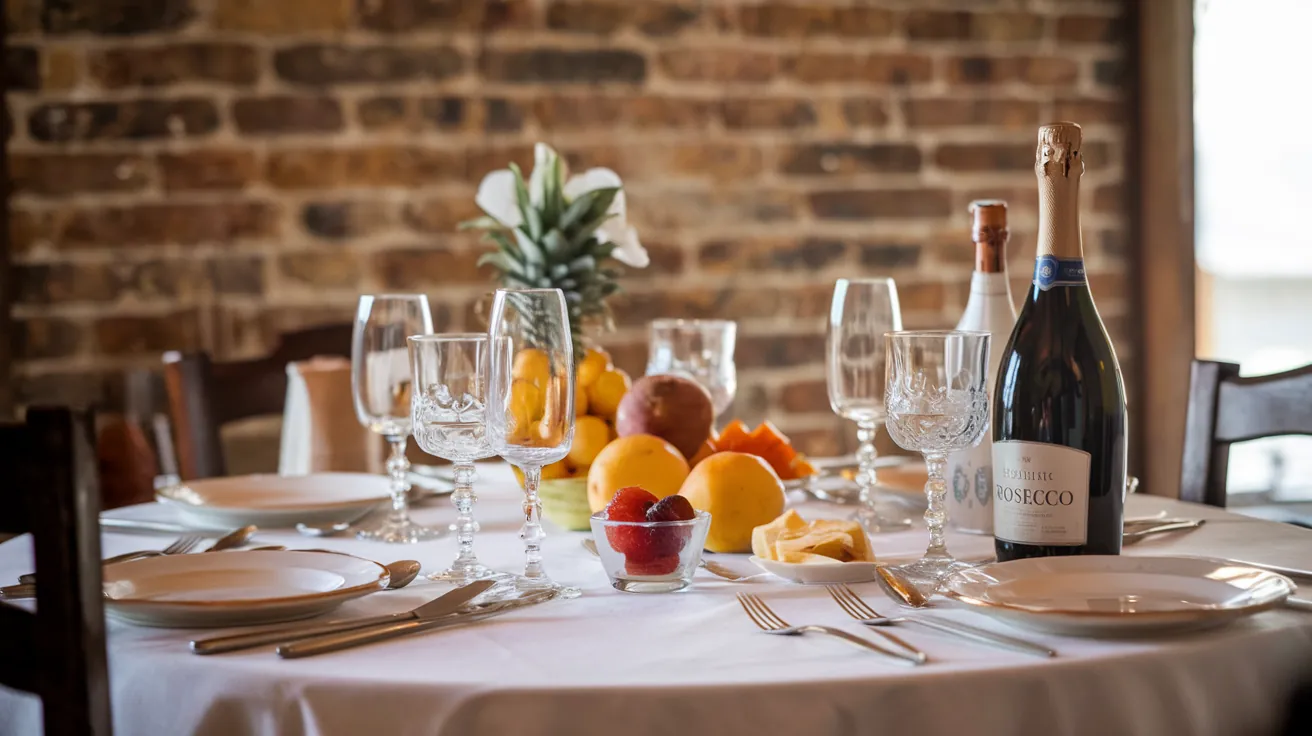
What you taste first: the difference you notice immediately
Open a Prosecco and the first sip is usually fruit: pear, golden apple, a light floral note like acacia. The bubbles are abundant and lively, almost playful. The mouth is soft, the finish short and clean. It is a wine that asks for the next sip without making you think about it.
Champagne tells another story. The bubbles are finer and more persistent, rising slowly up the glass. The nose gives you bread crust, yeast, candied citrus, sometimes butter or toasted hazelnut. There is more tension in the mouth, more acidity, a complexity that slows you down. Not better. Built for a different kind of attention.
The difference comes straight from how each is made. Prosecco is mostly produced by the Charmat method, where the second fermentation happens in large pressurised tanks. Champagne uses the classic method: the second fermentation happens inside each individual bottle, and the wine then rests on the spent yeasts for months or years before release. That long contact is what puts the bread and hazelnut in the glass.
Grapes, places and rules: where each one comes from
Prosecco comes from the Veneto and Friuli Venezia Giulia in the northeast of Italy, from a grape called Glera. Here is the part that confuses almost everyone outside Italy: Prosecco is a place and a denomination, not a grape. The grape has its own name, and the wine is named for where it is allowed to be grown, which is why sparkling wine made from Glera in Australia cannot be sold as Prosecco in Europe.
That growing area is large, and it is not one tier but two. The hills of Conegliano and Valdobbiadene carry the DOCG, the top rung of the Italian system; the flatter land around them carries the DOC. Both are legally Prosecco. The system is worth knowing in outline, because it is the single thing most misread about Italian wine: DOC and DOCG define where a wine is from and the rules it followed, not how good it is. A DOCG bottle from a careless producer can disappoint next to a DOC bottle from a careful one. What the tier reliably tells you is the ambition of the zone, not the talent of the winemaker.
Champagne comes from one region of France, around the Marne and the Aube. Three grapes do the work: Chardonnay, Pinot Noir and Pinot Meunier. Every house blends them differently, and that alone produces wildly different bottles. A Blanc de Blancs, all Chardonnay, is fine and chalky with citrus. A Blanc de Noirs, all dark grapes, has more body and darker fruit.
Prosecco has fewer internal variables of that kind, since Glera is Glera. The differences that matter there are of place: the steep hillsides of Valdobbiadene against the plain, and within those hills a small sub-zone called Cartizze, roughly 107 hectares that Italians treat as the summit and price accordingly.

When to open which, and what to eat with it
Prosecco is the wine for anything informal and quick. Aperitivo with cured meats and fresh cheeses, a Spritz on a terrace, an evening where the bottle should open and finish without ceremony. It also works with delicate food: lemon risotto, sea bass tartare, light fried fish. The fruit makes it easy to match.
Champagne asks for a different setting, at least some of the time. A non-vintage Brut is excellent with oysters, raw seafood, or a soft cheese like Brie. An aged vintage bottle earns its place next to something serious: pigeon, truffle risotto, a long-cooked white meat.
The price gap reflects real production costs rather than marketing alone. The classic method means handling every bottle individually and holding stock in a cellar for years, which is money that the tank method does not spend. That said, a good Prosecco has its own character and does not need the comparison. A Conegliano Valdobbiadene Superiore DOCG from a careful producer is not a cheap Champagne. It is a different wine that happens to have bubbles.
Domande frequenti
Is Prosecco just Italian Champagne?
No. Prosecco is made from Glera in the Veneto, mostly by the tank method. Champagne comes from France, from Chardonnay, Pinot Noir and Pinot Meunier, fermented and aged in the individual bottle. The similarity ends at the bubbles.
Why does Champagne cost so much more?
Every bottle ferments a second time on its own, then rests on the yeasts for months or years, then has to be riddled and disgorged. That is time, handling and cellar space per bottle. The tank method does all of it at once in one vessel. The price follows a real difference in process.
Which Prosecco should I buy if I want something more complex?
Look for Conegliano Valdobbiadene Prosecco Superiore DOCG, or Cartizze if you want the top of the hill. Against a Prosecco DOC from the plain you get more aromatic depth and a longer finish. Small producers are where the interesting bottles tend to be.
Can I use Prosecco in a Champagne cocktail?
You can, and it becomes a different drink. The classic uses the bready complexity of Champagne as its base; Prosecco gives you something fruitier and simpler. For a Spritz, Prosecco is the right choice and Champagne would be wasted.
Are there Italian sparkling wines made like Champagne?
Yes. Franciacorta DOCG in Lombardy is the closest in style, made by the classic method with long ageing, from grapes similar to Champagne's. Trento DOC in the Alps is the other one. Tasting either next to a Prosecco makes the difference between the two methods obvious in a way no description does.
Can I order Prosecco from outside Italy?
Prosecco is one of the easiest Italian wines to find abroad, and most European retailers carry it. The shop linked on this page ships to 41 countries, including the whole EU, the UK, Switzerland and Norway, so ordering from outside Italy is straightforward. Worth checking your own country is on their list before filling a basket. The DOCG bottles from Conegliano Valdobbiadene travel less widely than the DOC ones, so a specialist is usually the way to find them.